
Our Location
304 North Cardinal St.
Dorchester Center, MA 02124

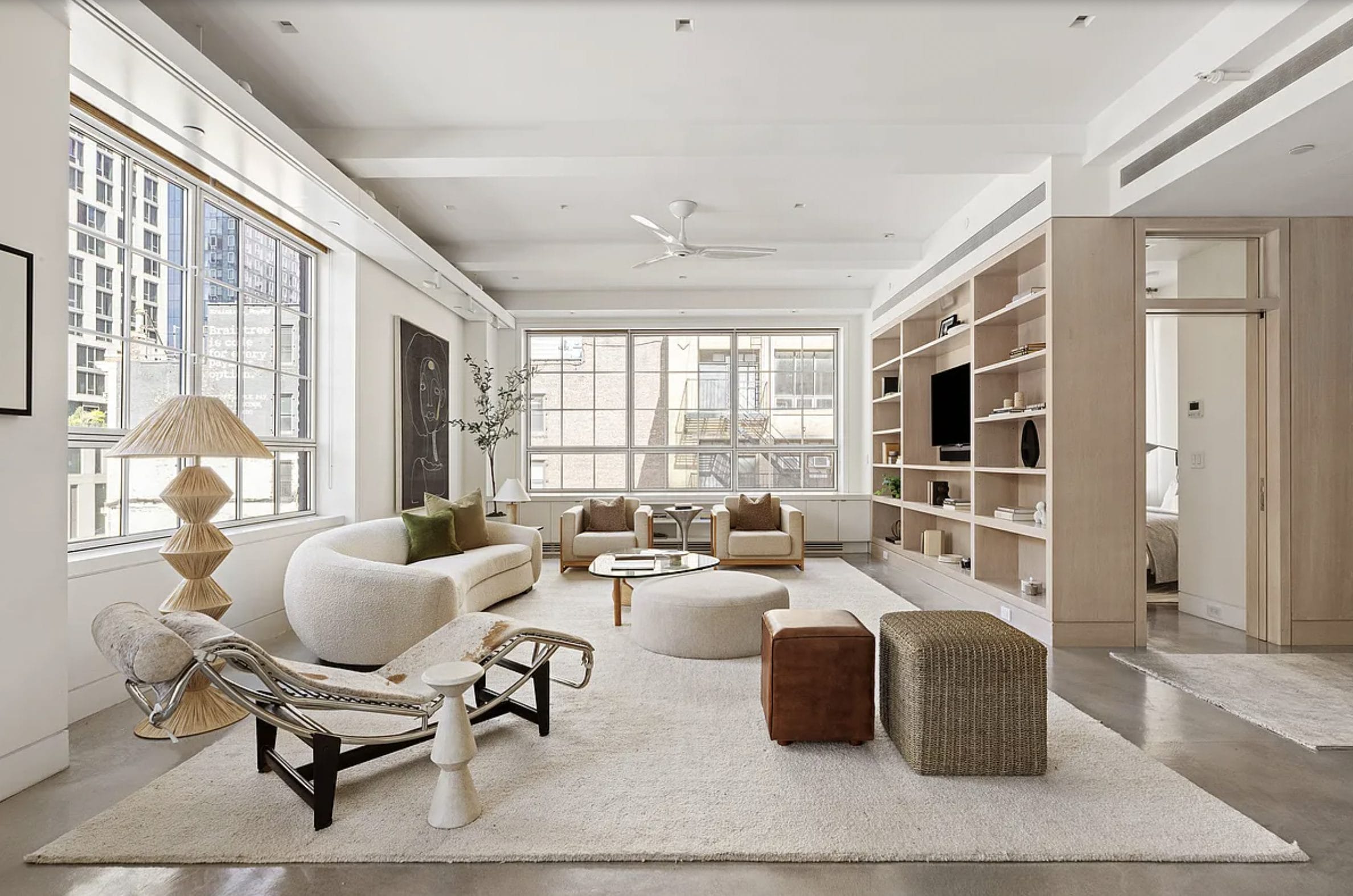
You’ve arranged your living room with care, pushed the sofa against the wall to maximize floor space, and left the center of the room wide open. So why does the room still feel cramped, awkward, and smaller than it actually is?
According to interior designers and recent studies on spatial perception, the answer lies in one counterintuitive mistake that nearly everyone makes – and fixing it takes less than an hour.
The most common living room layout mistake – and the one most responsible for making your home feel smaller – is pushing every piece of furniture against the walls.
It seems logical: move furniture to the edges, and the center of the room becomes open and spacious. But designers say this instinct backfires spectacularly.
“Lining everything along the perimeter actually makes the room feel smaller by emphasizing its boundaries,” warns interior designer Meredith Stern. Instead of opening up the space, wall-hugging furniture draws attention to the room’s dimensions, making its size limitations painfully obvious.
Jennifer Wilson, founder and design principal of Jennifer J Interiors, puts it bluntly:
“The quickest way to make a room feel disconnected, distant, and awkward is to push all of your furniture against the walls”.
The result is a room that feels like a waiting room – visually large but emotionally cold, with furniture pieces too far apart to feel connected.
Research on spatial perception supports what designers have long observed. A study published in the journal Frontiers in Psychology found that furnishing affects both perceived height and spaciousness judgments – and that the arrangement of furniture matters as much as the furniture itself.
When furniture is pushed against walls, it creates a hollow, disconnected center that makes rooms feel smaller and less comfortable than floating arrangements. The eye immediately registers the empty space as a void, while the perimeter feels crowded – a visual contradiction that makes the room feel chaotic rather than cohesive.
The solution is surprisingly simple: pull your furniture away from the walls.
Designers call this technique “floating” furniture, and it’s the single most effective way to make a living room feel larger, more inviting, and better proportioned.
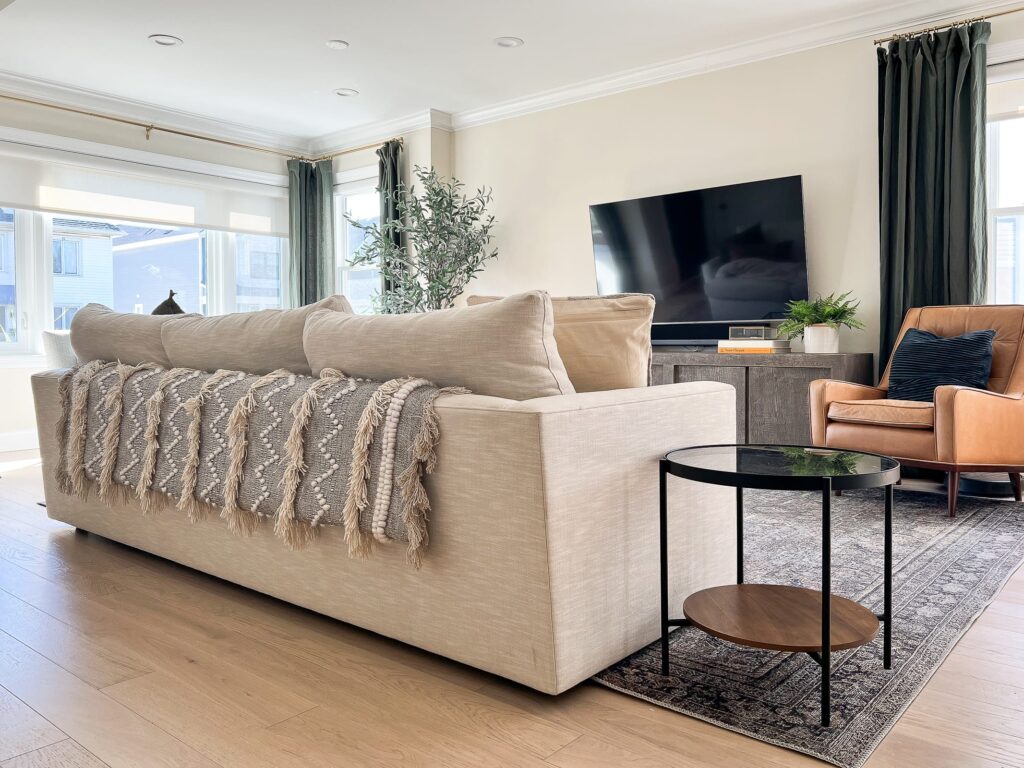
Step 1: Start with your sofa. Pull it 6 to 12 inches away from the wall. This small gap allows light to pass behind it and creates the illusion of more square footage. Better yet, position your sofa so it “floats” in the room, facing a focal point like a fireplace, media console, or window.
Step 2: Anchor with a rug. Place a large area rug under your floating seating arrangement. The front legs of every major furniture piece should sit on the rug. This grounds the space and defines the seating zone, making the room feel intentional rather than scattered.
Step 3: Use walls strategically. Walls aren’t off-limits – they just shouldn’t be lined with every piece of furniture. Reserve walls for accent chairs, consoles, built-ins, or artwork. This creates visual interest while keeping the center of the room open and inviting.
– A sofa positioned a few inches from the back wall, with a narrow console table behind it
– Two accent chairs angled toward the sofa, creating a conversation circle
– A coffee table centered within the seating arrangement
– An area rug that unifies all these elements
“Floating furniture actually makes a room feel larger – it defines a space instead of outlining it,” Stern explains.
Once you’ve fixed the wall-hugging issue, check for these other common space-shrinking errors:
“The typical misstep is picking one that’s just a little bit too small and hanging it underneath a coffee table like a coaster,” says design expert Rossella Marzocchella. A too-small rug makes furniture look huddled and crowded, creating an unbalanced room.
Fix: Choose a rug large enough that at least the front legs of all major furniture pieces rest on it.
Trying to incorporate too many small furniture pieces or accessories into a compact space creates clutter.
“Rather than helping the space ‘breathe,’ they often break it up visually, creating an overcrowded look,” warn designers Sarah and Liz Hellmers.
Fix: Choose fewer, larger statement pieces and embrace “visual stillness”.
When every piece of furniture lives at knee height, the room feels compressed.
Fix: Add tall bookshelves, floor lamps, or artwork that draws the eye upward. Install curtain rods just below the ceiling to make windows – and the room -feel taller.
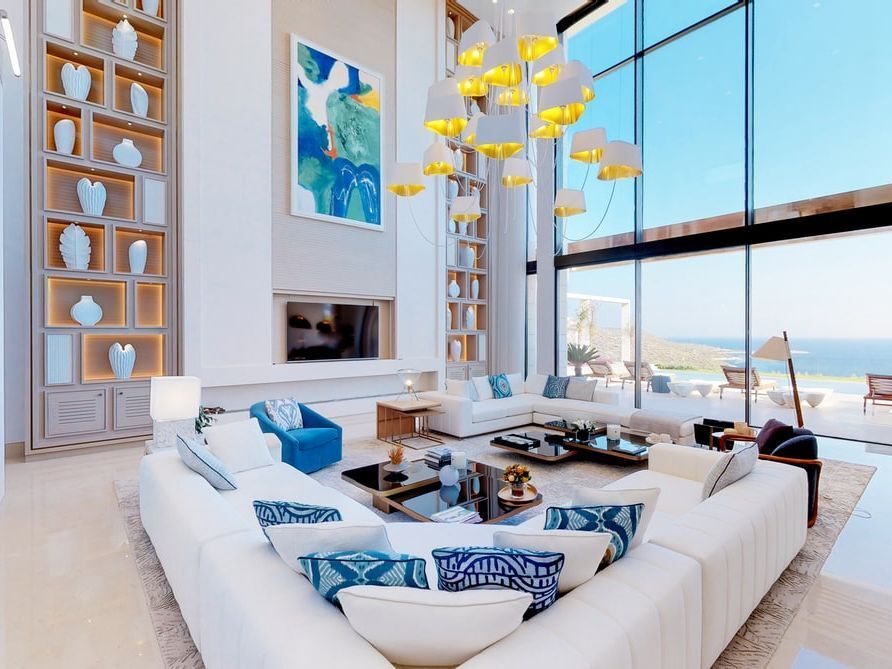
While dark colors can add drama, they can also make a room feel smaller and more cramped.
Fix: Opt for lighter colors on walls and large furniture pieces to create a sense of openness, then add drama through accent pieces like throw pillows or an occasional chair.
The one living room mistake making your home feel smaller is pushing all your furniture against the walls. It’s an instinctive choice – but it’s also the easiest to fix.
By floating your furniture, anchoring with a properly sized rug, and being intentional about scale and vertical space, you can transform even the smallest living room into an open, airy, and inviting space. As designer Meredith Stern puts it:
“Get the scale right and everything else falls into place”.
Try it today. Pull your sofa away from the wall, rearrange your seating around a rug, and see the difference for yourself. Your living room will feel instantly larger – without adding a single square foot.
